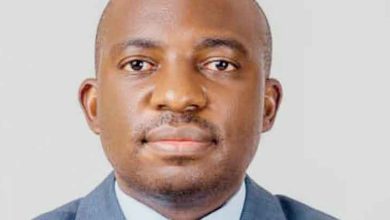
Being the first born in a family of five, Pilira Ndaferankhande wanted to have a family full of love, one with no fights, having grown without seeing their engineer father Mark fight with their mother Stella, a teacher.
She wanted to lead the way for her three siblings.
Now a grandmother of two, Pilira says she kept herself pure until her first wedding in 1997. But, the marriage ended in divorce in 2005 when their twin daughters were six.
She then pushed marriage to the back of her mind, but everything changed when she joined the Malawi Interfaith Association for Action (MIAA) as a projects officer in 2008. Religious leaders asked her to remarry, to gain respect.
The second marriage lasted for only two and half years and Pilira saw her world crumbling.
“I felt like a disgrace to myself and even more to my family. Being
divorced twice meant I was the problem or the worst person,” she recalls.
Pilira felt alone and as there was no one to hear her out. It was too much for the born-again Christian and she attempted suicide.
According to her, the judgment was more unbearable for a Christian.
“The darkness was real. The weight felt unbearable. It was around midnight and was about to take some pills to end it all when I had divine visitation. God said no. The words did not come with thunder or a dramatic vision. Just a quiet, but firm no, saying this is not the end of your story.
“That ‘no’ saved me. I pass on that same word to every person who has ever stared into the same abyss. Challenges are inevitable. They come to the powerful and the ordinary, to the leader and the follower, to those who look strong on the outside, but crumbling within,” says Pilira.
Having survived suicide, she started counselling single mothers, but on seeing that more men than women were facing the trauma, she formed the In the Shoes of Men Mental Health Grouping in 2021.

Statistics show that more men than women commit suicide in Malawi. The country recorded 527 suicides in 2023 and 597 in 2024, including 522 men. Between 2022 and 2025, more than 2 000 lives were lost; 153 died by suicide in the first three months of 2025. Most were men aged 20–39.
Experts estimate 10–20 attempts for every suicide, yet one in 10 needing help receives it. Her organisation campaigns against suicide, encouraging men to speak about psychological distress.
Pilira, who has risen over the years to become MIAA executive director, says she has dealt with sheikhs and church ministers on the brink of suicide because they could not share their problems with members of their flock who take them as being closer to divinity.
“Silence can become its own form of danger. Men are often taught to perform strength even when they are frightened, grieving or falling apart,” she says.
In her view, a man who admits he is struggling should not be mocked or dismissed. He should be heard.
Her advice, when discussing mental health issues with men like she did on October 3 when she was a guest of honour at a dinner hosted by the Abambo Tibe Khonde Initiative, is that great men in history such as Winston Churchil and Abraham Lincoln overcame depression.
Even Jesus encountered depression in the garden of Gethsemane while Elijah, who killed over 400 prophets of Baal, struggled emotionally at the hands of Jezebel.
“Challenges are not a sign you are weak. They are often equal to the greatness that is still waiting to be born in you. Never give up. Not while breath is still in your body. Not while God still has a purpose for your name,” she said.
Young Achievers for Development executive director Jefferson Milanzie says Pilira’s passion for men’s mental health is worth noting.
“She understands these issues so it is easy for her to get involved. She identifies with issues that men face and gives a good perspective,” says Milanzie.
Recently, MIAA named her the most resilient member of staff at a time most employees quit following funding cuts.
Being the longest serving employee, Pilira has worked as a volunteer for three years because “it is a ministry God gave her”.
She believes Malawi’s established platforms, including the Public Affairs Committee and MIAA, have demonstrated that cooperation can
work.
Examples have emerged in HIV and Aids, elections, disaster response and public controversies.
But, she thinks the country must go further.
“Religious leaders can reach people more effectively than government officials,” she says.
That influence, argues Pilira, can help address gender-based violence, child marriage, peaceful elections and other social problems.
She is, however, worried that influence can also be misused, especially through partisan politics, inflammatory preaching and the exclusion of significant religious constituencies from national conversations.
“An interfaith organisation that becomes an extension of whoever occupies the State House loses the independence necessary to speak truth to power.
“We need to build relationships before they are needed where every district should have a functioning interfaith council, meeting regularly, including women and young people as genuine decision-makers,” she added.
Born on 11 April 1976, Pilira comes from Beleu Village, Traditional Authority (T/A) Maseya and Lundu Village T/A Chapananga, both in Chikwawa District.
Her journey has taken her from information systems and biomedical research to HIV programmes, women’s empowerment, humanitarian work, corporate governance, disability advocacy and mental health.
She has been a member of Sunbird Hotels board of directors (Finance and Audit and Business Sustainability Sub Committees) and she is board chair of Vision for Young People with Disabilities.
Pilira also sits on the board of Active Women in Mining in Malawi (Awoma) under Women in Mining (WIM) as vice chairperson.
She completed her secondary school education in 1994 at St Michael’s Girls Secondary School before pursuing a Bachelor of Science in information systems with London Metropolitan University which she obtained through the National College of Information Technology in 2008.
Pilira has a Master of Science in Leadership and Change Management with Leeds Metropolitan University obtained in 2013.
She first entered professional life through research data, working with University of North Carolina and Johns Hopkins-linked projects in Malawi before joining MIAA, an organisation which she says has helped her understand other religions such as Rastafarianism and the Apositoli and Aziyoni.
Over time, she moved from managing individual projects to helping shape institutions.
Pilira has overseen large, donor-funded programmes across numerous districts, worked with religious and traditional leaders, and managed substantial organisational resources.
She has helped develop training manuals, community monitoring systems and programmes involving HIV, gender, sexual and reproductive health, safeguarding and humanitarian accountability.
From Chikwawa to the boardroom, from HIV programming to mental health, from religious dialogue to women’s empowerment, Pilira has repeatedly gravitated towards people and institutions standing at the margins.
As her name, Pilira, suggests, resilience is her drive.